CW JONES CARPETS BRISTOL
The Largest Carpet Showroom in Bristol

Bristol Carpets

Who you are, how long you have traded, where the showroom is, how many ranges are on display, which brands, what fitting costs from, and the area you cover.


Quality Bristol Carpet Stockist


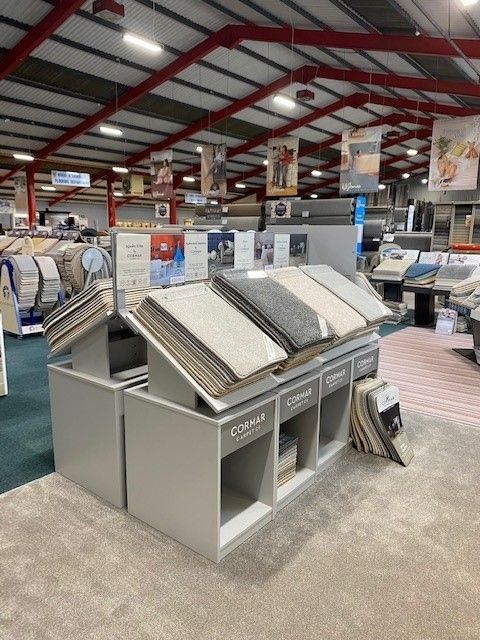
We stock all types of carpets from Saxony, Sisal to Loop Pile and Twist carpets. Visit our Bristol carpet showroom and one of our friendly experts will help you to choose the right carpet type for your home, with fantastic products and a huge selection from major brands such as Brintons , Cormar , Alternative  Flooring , Kingsmead , Victoria Carpets , Ulster , Axminster and Abingdon .


From design to carpet installation, we offer the complete service by providing you with all your carpet needs under one roof. We have a large selection of carpets for sale to suit every budget, and our expert carpet fitters can get your carpet professionally installed in no time at all.

 

Carpet Shop Bristol

BUYER'S GUIDE TO CARPETS

Carpets are either made of natural or synthetic fibres. Natural fibre carpets are typically more expensive and require more maintenance, but they last longer than their synthetic counterparts. Here’s a breakdown of the popular carpet materials.


NATURAL


  • Wool — Wool is durable, soft, warm, and vibrant. It is also easy to clean and resistant to dirt and bacteria growth. However, pure wool carpets command a high price, attract insects, can stain easily, and fade in colour when exposed to too much sunlight.
  • Sisal — Sisal carpets are plant-based, making them strong and hard-wearing. They have an organic look and feel, although some might find them rough underfoot. Such carpets also stain easily. 

SYNTHETIC


  • Polypropylene — The softness, durability, and stain-resistance of polypropylene carpets are great for their price. You can get the most value for money with this synthetic material. 
  • Polyester — You can get the look and feel of wool with a polyester carpet for a more affordable price. It is often blended with wool to achieve its qualities.
  • Nylon — For supreme durability, you can’t go wrong with a nylon carpet. It stretches with high foot traffic then returns to its original form, ensuring you get a good-looking carpet for a long time.

CARPET STYLES


How a carpet is made determines its texture and appearance, while contributing to its durability.


  • Twist — Yarn twisted tightly in a one-way pile direction makes for smooth and long-lasting carpets. You can place these in high-traffic areas without worrying about them losing their lustre.
  • Saxony — For a soft, luxurious feeling carpet that you can dig your toes into, saxony is the style you’re looking for. Do take note that they easily flatten and leave indentation marks. 
  • Loop Pile — Loop pile carpets have looped yarns which can be uniform or in differing heights to create a range of textures. This style’s ruggedness and durability make it practical, except for pet owners who have pets that can rip out the loops with their claws.
  • Cut & Loop — By combining looped and straight fibres, such carpets are a good blend of lasting power, comfort, and flexibility in visual design. You can have varied patterns for cut & loop carpets.
  • Velvet — Dense and cosy with a rich finish, velvet carpets are a fine choice for those who want a touch of class and comfort in their bedrooms and living rooms. They are also hard-wearing and easy to maintain.

PILE LENGTH


You can choose the length of the fibres of a carpet to fit its use.


  • Deep — A deep pile carpet means the fibres are long and loose. You can sink your feet into such carpets, which makes them good for spaces where people can relax. 
  • Short — With a short pile carpet, the fibres are packed densely and recover their form quickly. High-traffic areas are where you want to place such carpets.

COLOUR & PATTERN


Neutral colours work best for carpets. They already take up a lot of space in a room, so you don’t want them to overpower everything else with a bright and bold colour. 


Dark shades are better for high-traffic areas, while you can go light for light-traffic spaces. Darkly coloured carpets can look better for longer, even when plenty of people are walking all over them. 


For patterned carpets, you can use them to contrast with other elements of a room, or make bold, expressive statements. Stripes can add dimension and energy to a space.

Where you put your carpet matters. Here are guidelines for choosing a carpet based on rooms.


LIVING ROOM


Look for a carpet with a mix of comfort, durability, and ease of cleaning to account for the amount of activity a living room accommodates.


BEDROOM


Comfort is the number one priority. A deep pile Saxony carpet is highly recommended.


DINING ROOM


Stain resistance and ease of cleaning are top considerations. A polypropylene carpet is a good choice.


HALL, STAIRS & LANDING


High foot traffic is the main concern for these areas, so hard-wearing carpets are a must. Try twist or loop pile carpets.


BATHROOM


Whilst most people these days prefer engineered wood, vinyl or tiles in bathrooms, carpets are still an option. Look into waterproof backing, as moisture is the key problem in bathroom carpeting.


KITCHEN


As with bathrooms, tiles, engineered wood or vinyl flooring is more popular in kitchens but it’s not unheard of for kitchens to be carpeted. Factoring in the spills, stains, and foot traffic in a kitchen, your best bet would be a polypropylene carpet to handle these issues.

ADDITIONAL CARPET NEEDS

There are a couple of carpet accessories you need to finish carpet fitting. Grippers are essential for keeping carpets in place. Underlays provide sound and heat insulation, while adding another level of comfort and durability to the carpet. 

Not only can we help and  advise you when it comes to finding the perfect carpet for your home, but CW Jones can do all the fitting and installation for you as well. 

CARPET TYPES & PRICE GUIDE

Choosing the right carpet involves more than selecting a colour or pattern. The fibre affects durability, stain resistance, comfort and price, while the construction of the pile determines how the carpet looks and performs in different areas of your home.

The prices below are indicative UK price bands for the carpet itself. Exact prices depend on the manufacturer, range, specification and design selected.

CARPET FIBRES

Carpet Type What Is It Like? Best For Indicative Price
Polypropylene Soft, practical and highly stain resistant. Polypropylene offers excellent value and is particularly suitable for busy households. Dining rooms, family rooms, children's rooms and other busy areas £8–£20 per m²
Wool Blend Combines wool with synthetic fibres to balance natural comfort, resilience, durability and value. Living rooms, stairs, hallways and bedrooms £20–£40+ per m²
Wool Naturally warm, resilient and comfortable underfoot. Wool is a premium carpet fibre with excellent durability when properly maintained. Living rooms, bedrooms, stairs and premium interiors £30–£60+ per m²

CARPET STYLES

How a carpet is made affects its appearance, texture and durability. Twist, loop pile and Saxony carpets each provide a different combination of comfort and practicality.

Carpet Style What Is It Like? Best For Indicative Price
Twist Tightly twisted fibres create a textured, hard-wearing surface that performs well under regular foot traffic. Living rooms, halls, stairs and landings £10–£35+ per m²
Loop Pile Yarn is formed into loops to create a durable and naturally textured surface. The loops may be uniform or arranged at different heights. Living rooms, halls, stairs and other busy areas £10–£40+ per m²
Saxony A deeper cut pile creates a soft, plush and luxurious feel underfoot. It can show footprints and furniture impressions more readily than shorter pile carpets. Bedrooms, lounges and lower-traffic areas £20–£45+ per m²
Please note: These prices are intended as a general guide rather than a CW Jones price list. Carpet prices vary depending on the manufacturer, collection, specification and individual installation requirements.

CARPET UNDERLAY OPTIONS & COSTS

A good-quality underlay can improve comfort, thermal insulation and sound reduction while helping to support your carpet and extend its useful life. The most appropriate option will depend on the carpet, room and level of use.

Underlay Type Main Benefits Best For Indicative Cost
PU Foam Underlay Lightweight, comfortable and thermally efficient. A popular option for many domestic carpet installations. Bedrooms, lounges and general household use £3–£8 per m²
Crumb Rubber Underlay Dense, firm and durable, providing strong support in areas exposed to regular foot traffic. Hallways, stairs and busy rooms £4–£10 per m²
Sponge Rubber Underlay Provides good comfort, resilience and sound insulation with a springier feel underfoot. Living rooms, bedrooms and premium installations £5–£12+ per m²
Felt / Combination Underlay Provides firm support together with good thermal and acoustic properties. Woven carpets, stairs and high-traffic areas £4–£10+ per m²

The thickest underlay is not necessarily the best option for every carpet. Our team can advise on a suitable underlay based on your chosen carpet, the room and how the floor will be used.

WHAT'S INCLUDED IN CARPET FITTING?

CW Jones offers carpet fitting and installation as part of its complete carpet service. The exact materials and fitting services included will be confirmed in your quotation.

TYPICAL FITTING SERVICES

  • Measuring the room and calculating the carpet required
  • Checking the existing subfloor before installation
  • Laying suitable underlay where included in your quotation
  • Installing and stretching the carpet correctly
  • Cutting and finishing the carpet around the perimeter of the room
  • Neat fitting around doorways and fixed features
  • Fitting trims and thresholds where specified
  • Final finishing of the carpet installation

WHAT MAY COST EXTRA?

  • Uplifting existing carpet or flooring
  • Disposal of old carpet
  • New underlay
  • New or replacement gripper rods
  • Door bars and thresholds
  • Moving furniture
  • Trimming or adjusting doors
  • Subfloor repairs or levelling
  • Plywood or other floor preparation
  • More complex staircase installations
  • Specialist fitting requirements
Old carpet removal: CW Jones can uplift and dispose of your old carpets, but this is a chargeable service. You are also welcome to arrange removal yourself before fitting.

HOW MUCH DOES CARPET FITTING COST?

Carpet fitting costs depend on the size and shape of the room, the type of carpet selected and whether additional preparation is required. As a general UK guide, standard carpet fitting is typically around £5–£8 per m².

Stairs, unusual layouts and specialist installations can cost more. Underlay, gripper rods, thresholds, floor preparation and removal of existing flooring may also be priced separately.

CW Jones provides a free home measuring and estimating service, allowing your quotation to be based on your actual rooms and flooring requirements.

CARPET ORDERING & FITTING LEAD TIMES

Lead times depend on whether your chosen carpet is currently available, needs to be ordered from the manufacturer or is part of a specialist range.

Stage Typical Timescale
Home Measuring & Quotation Appointment arranged with our team.
In-Stock Carpet Installation may be available within several working days, subject to product and fitter availability.
Manufacturer-Order Carpet Commonly around 1–3 weeks, depending on the manufacturer and current stock availability.
Specialist or Bespoke Carpet May require several weeks or longer, depending on the selected product and manufacturer.
Fitting Appointment A convenient installation date can be arranged once product availability is confirmed.
Lead times are indicative rather than guaranteed. Manufacturer availability, delivery schedules, project requirements and fitter availability can all affect the final installation date.

SHOP CARPETS BY BRAND

Explore carpets from leading manufacturers stocked by CW Jones.

Visit our Bristol carpet showroom to compare carpet fibres, styles, colours and manufacturers and speak to our team about the most suitable carpet and underlay for your home.


CARPET FAQs

Got a question about carpets? We’re here to help.
  • How often should you have a carpet cleaned?

    The frequency with which you should have your carpet professionally cleaned depends on how much foot traffic it gets. If it is only getting light foot traffic, you can have it deep cleaned once every 12 to 18 months. Heavy foot traffic would require professional carpet cleaning once every 6 to 12 months. 

  • How often should you vacuum a carpet?

    Vacuum at least once a week. However, you will want to increase the frequency if you have kids, pets, smokers, people with allergies in your household, or if you have a light-coloured carpet where dirt would be more visible. Twice or thrice a week should be ideal for such scenarios.

  • What's the best way to care for carpets and keep them looking fluffy and new?

    Have a no-shoes policy for rooms with carpets. Doormats help prevent soiling. Immediately clean any spills to keep stains from forming. Vacuum regularly, and schedule deep cleaning once or twice a year.

  • How to clean wool carpets?

    Wool carpets are made of natural fibres, making them highly resistant to dirt, soiling, and stains from oil-based liquids. However, wool is also highly absorbent, so you can’t allow it to stay wet for long. Regular vacuuming is a given for cleaning dirt, but you will also have to act fast to clean up spills. Blot spills instead of scrubbing, as doing the latter will only soak the carpet more, and worsen the stain. 

  • Will CW Jones remove my old carpet?

    We can uplift and dispose of your old carpets but this is a chargeable service. Of course, you’re welcome to do this yourself or through a local handyman.

  • How to dispose of an old carpet?

    Use pliers to detach the carpet from its adhesive strips keeping it on the floor, and do the same with the remaining carpet padding. Cut it with a knife into small, easy-to-handle portions. Roll these portions into bundles and tie them up. You can dispose of these bundles in a recycling centre or leave a few rolls for the bin lorry to collect once a week. 

  • How to stop cats scratching carpets?

    You have to provide an alternative scratching spot. There are plenty of cat scratching poles you can find at pet stores, which can be placed where your cat likes to scratch your carpet. You can also cover the part of the carpet your cat scratches with double-sided adhesive tape for a few weeks to discourage scratching and get your naughy feline out of the habit.

  • Why do carpets Bristol remain a popular choice for homes and workplaces?

     Carpets Bristol help improve comfort underfoot and reduce noise transfer between rooms, which supports quieter living and working environments. At CW Jones, our professional services align with UK guidance on sound insulation in buildings, where soft floor finishes help manage acoustic performance (source: https://www.gov.uk/government/publications/resistance-to-sound-approved-document-e).


  • What is the benefit of visiting your physical showroom before choosing carpets Bristol?

    Our flooring superstore in Bristol allows you to see colours, textures, layouts, and finishes in real lighting conditions, making it easier for you to assess suitability before committing.

  • How can I compare styles and materials before making a final decision?

    Visiting our carpet shop in Bristol gives you access to our samples, side-by-side comparisons, and practical guidance based on how your rooms are used.

  • Are discounts or promotions available on carpets and flooring Bristol?

    Absolutely. Many Bristol customers check our special offers to plan upgrades around seasonal availability, which can help you manage your budget when replacing carpets and flooring across your multiple rooms.

  • Why is professional installation important for long-term performance?

    Proper carpet fitting Bristol services help ensure correct stretching, secure edges, and a smooth finish, reducing the risk of early wear or movement.

  • How do I choose flooring that suits busy areas of my Bristol property?

    Working with our flooring specialists Bristol helps match materials to your property’s foot traffic levels, layout, and maintenance needs, particularly in shared or high-use spaces.

  • What flooring works well in kitchens and hallways alongside carpets Bristol?

    Many properties combine carpets with LVT flooring Bristol options, which provide a stable surface in areas exposed to moisture or frequent cleaning.

  • When should I consider hard flooring instead of carpets?

    In open-plan layouts or dining areas, solid wood flooring Bristol can help define your space while maintaining a clean and consistent finish.

  • What are the flooring requirements for business premises in Bristol?

    Commercial flooring Bristol solutions must meet workplace safety standards, as floors should be suitable for the activity taking place and allow safe movement (sources: https://www.hse.gov.uk/slips/flooring.htm and https://www.legislation.gov.uk/uksi/1992/3004/contents/made).

  • How can I get expert help choosing the right carpet or flooring product?

    If you’re comparing carpeted rooms with natural flooring Bristol or planning insulation improvements, our professional guidance helps ensure your floor structure and materials work together effectively (source: https://assets.publishing.service.gov.uk/media/5f05d211d3bf7f2be6e0217a/suspended-timber-floors-underfloor-insulation-best-practice.pdf). 

Contact us now for our best prices on our extensive range of carpets and flooring.
Contact Us
Do you have any questions? Click below to book a free home visit today!
Book Free Home Visit
DISCLAIMER:Colours on screen may vary from actual flooring colours. We strongly advise you view any product range in-store or call us for a free sample. Manufacturers have reserved the right at any time to withdraw or amend any of our product ranges.